
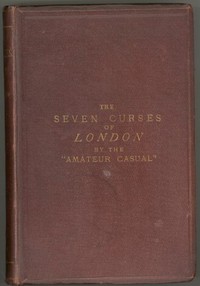
The seven curses of London by James Greenwood
Let's set the scene: London, 1869. The British Empire is at its peak, but for thousands living in its heart, life is a daily battle. James Greenwood wasn't interested in writing about palaces. He wanted to expose the rot. 'The Seven Curses of London' is his fearless catalogue of the city's greatest social failures.
The Story
There's no traditional plot here. Instead, Greenwood acts as our reporter, breaking down London's misery into seven clear categories. He walks us through the life of the 'professional beggar' who makes a living from pity, and the 'fallen women' with few options for survival. He shows us the 'thieves' and 'swindlers' preying on the desperate. Perhaps most moving are the sections on 'neglected children' and 'the unemployed', showing how poverty was a trap passed from one generation to the next. He even takes aim at the 'drunkards' and the 'betting men', arguing how these vices keep the poor in chains. Each 'curse' is a window into a world of struggle that polite society preferred to ignore.
Why You Should Read It
This book is a punch to the gut, but in the best way. Greenwood’s writing isn't dry or academic. You can feel his anger and his compassion on every page. He doesn't just describe a child sleeping in a gutter; he makes you wonder about that child's name and future. What makes it so compelling today is recognizing the echoes. While we don't have 'climbing boys' cleaning chimneys anymore, we still debate how to help the homeless, how to support addicts, and how to break cycles of poverty. Reading this is a powerful reminder that these aren't new problems. It gives incredible context to novels by Dickens or Arthur Conan Doyle, showing you the real world their stories came from.
Final Verdict
This is a must-read for anyone who loves deep-dive social history, true crime origins, or Victorian literature. It's perfect for fans of books like 'The Five' by Hallie Rubenhold or anyone who watches a period drama and wonders, 'But what was it *really* like for most people?' Be warned: it's not a light, easy read. It's a document of human suffering. But it's also a record of one man's determination to shine a light in the darkest corners. If you're ready to see the Victorian era without the rose-tinted glasses, pick this up. You won't look at the 19th century—or modern cities—the same way again.
There are no legal restrictions on this material. Preserving history for future generations.
William Taylor
1 year agoThe citations provided are a goldmine for further academic study.
Richard Rodriguez
1 year agoThe digital formatting makes it very easy to navigate.
David Moore
1 month agoI've gone through the entire material twice now, and the argument presented in the middle section is particularly compelling. This exceeded my expectations in almost every way.
Jennifer Gonzalez
10 months agoGiven the current trends in this field, the language used is precise without being overly academic or confusing. This has become my go-to guide for this specific topic.








Michael Thompson
3 weeks agoI found the author's tone to be very professional yet accessible, the nuanced approach to the central theme was better than I expected. I’ll definitely be revisiting some of these chapters again soon.